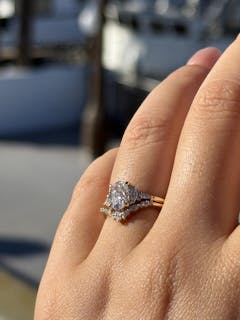
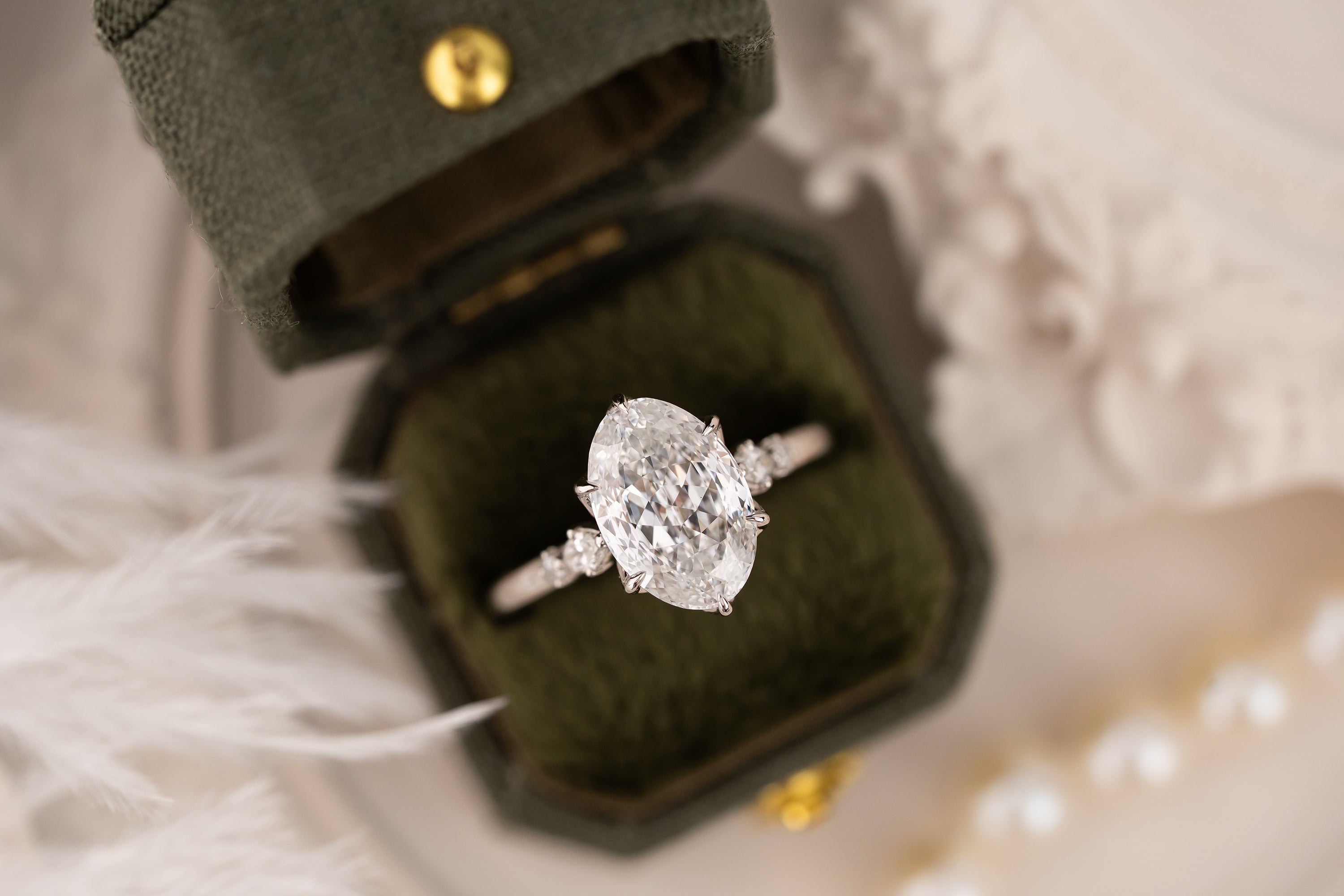
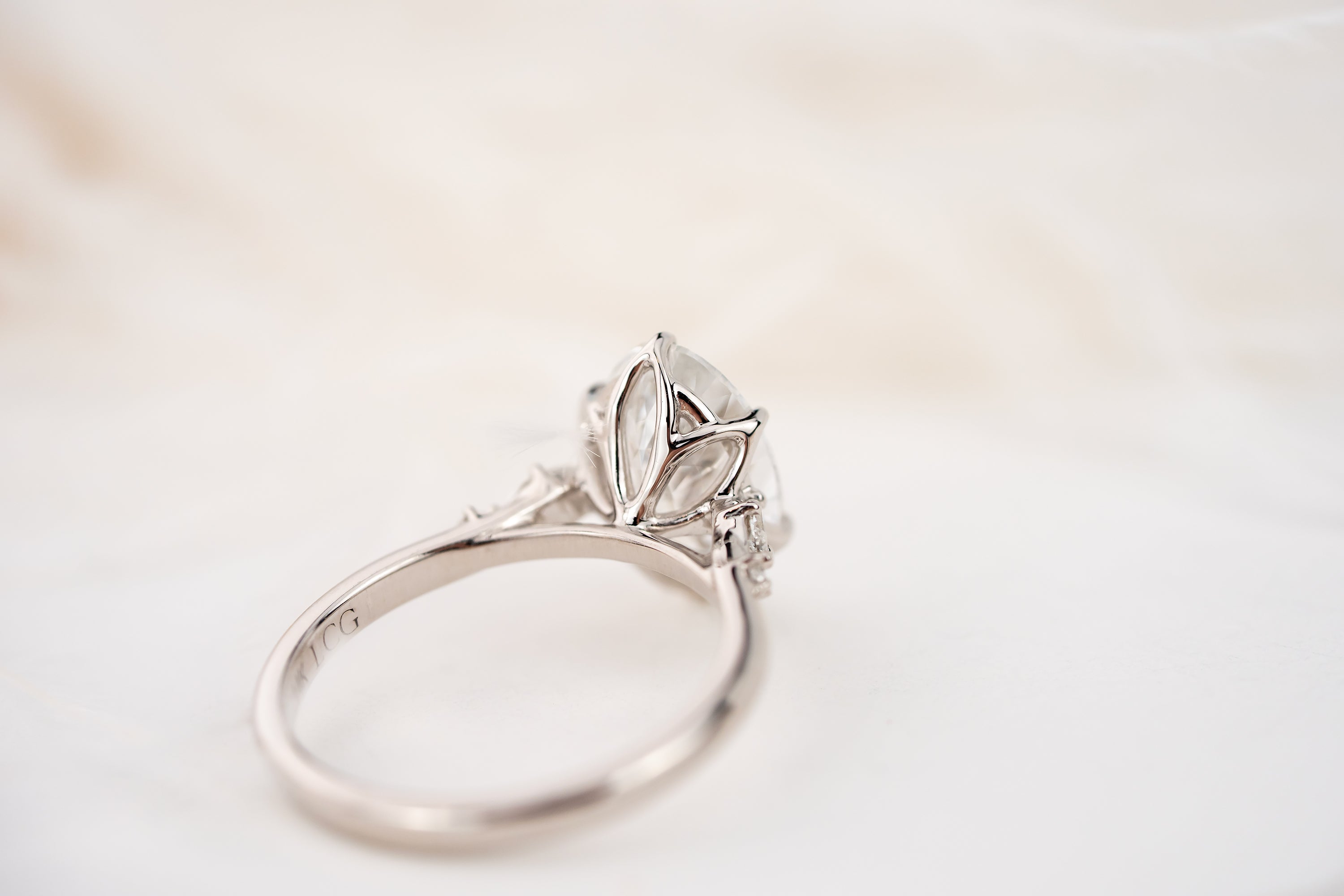
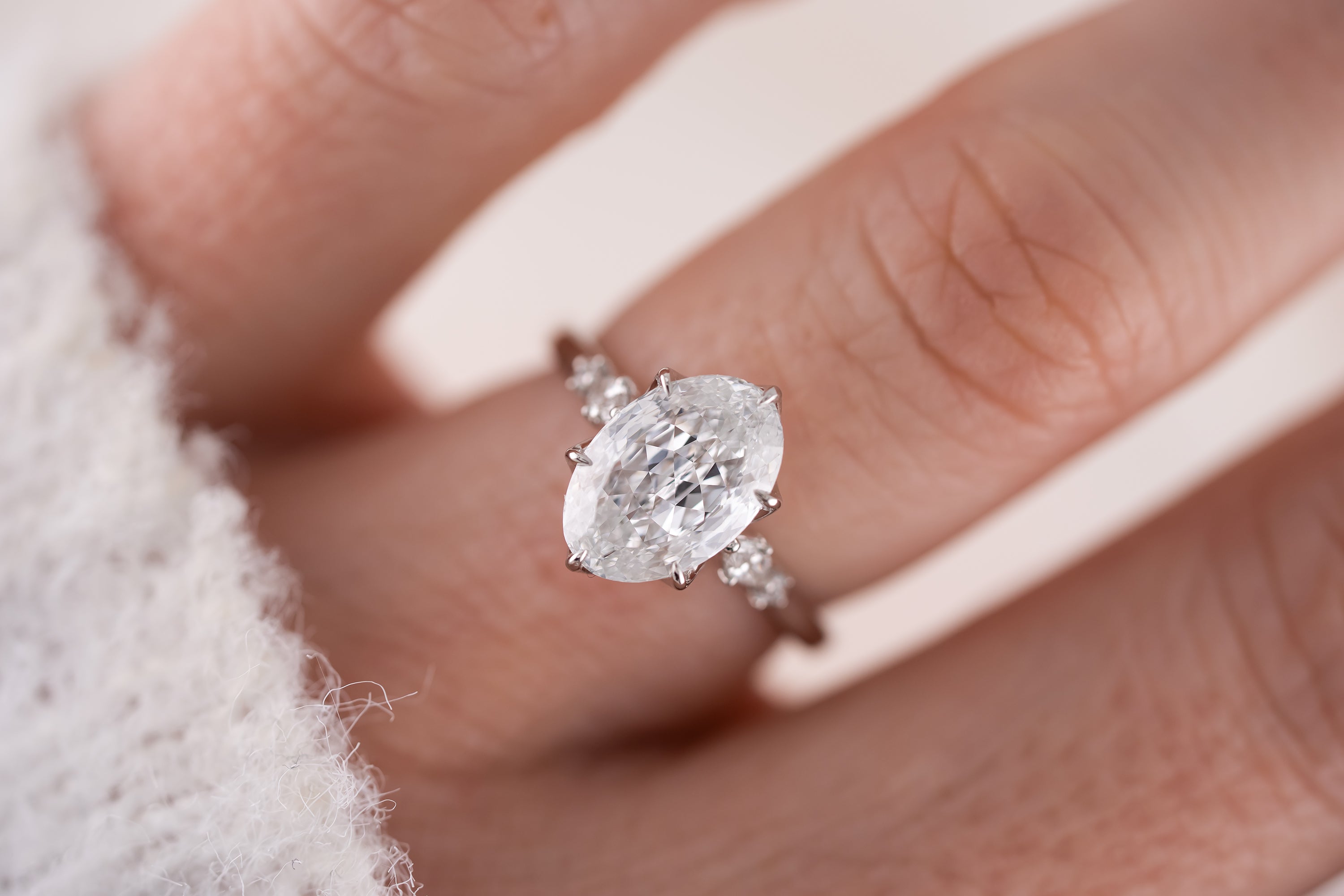
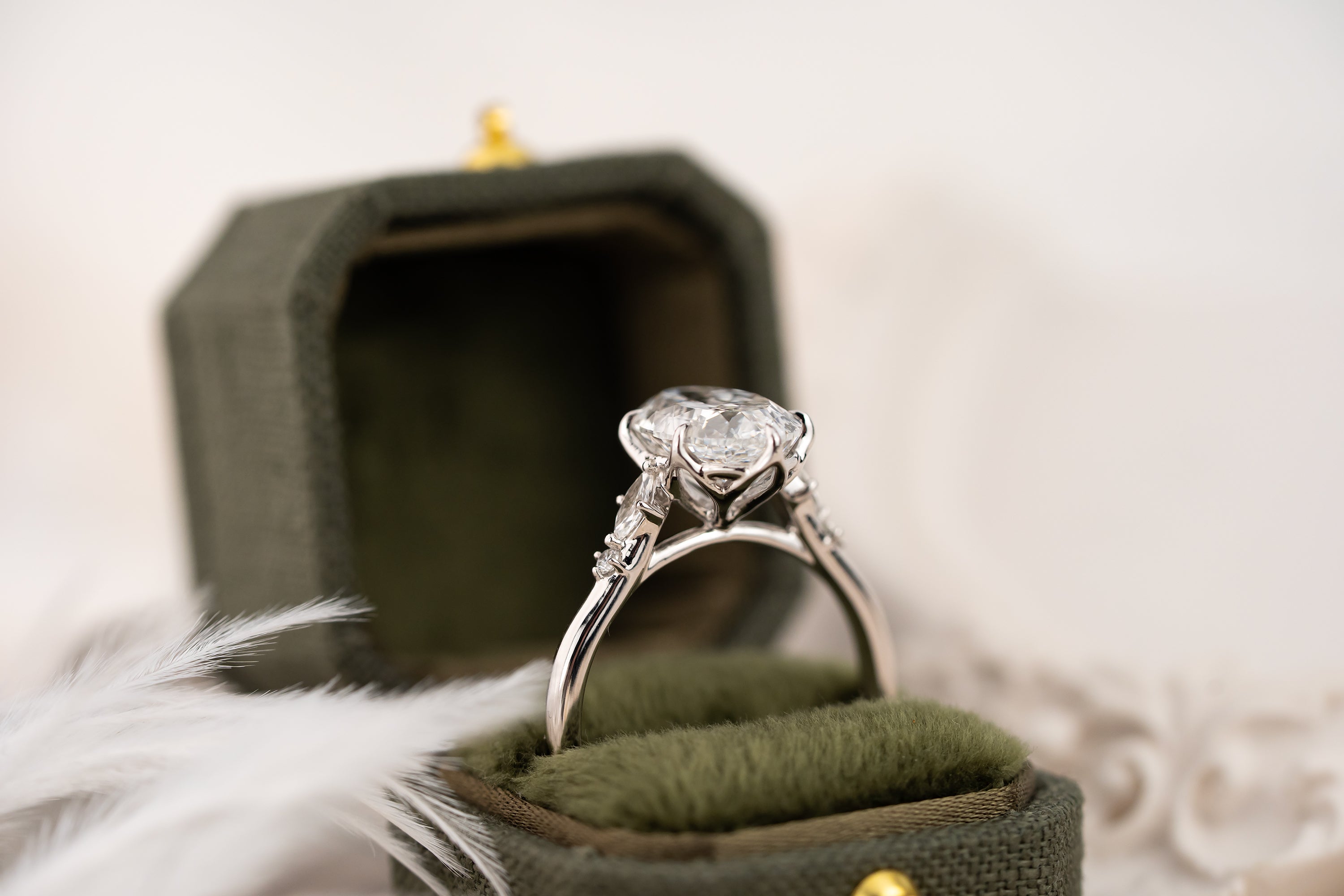
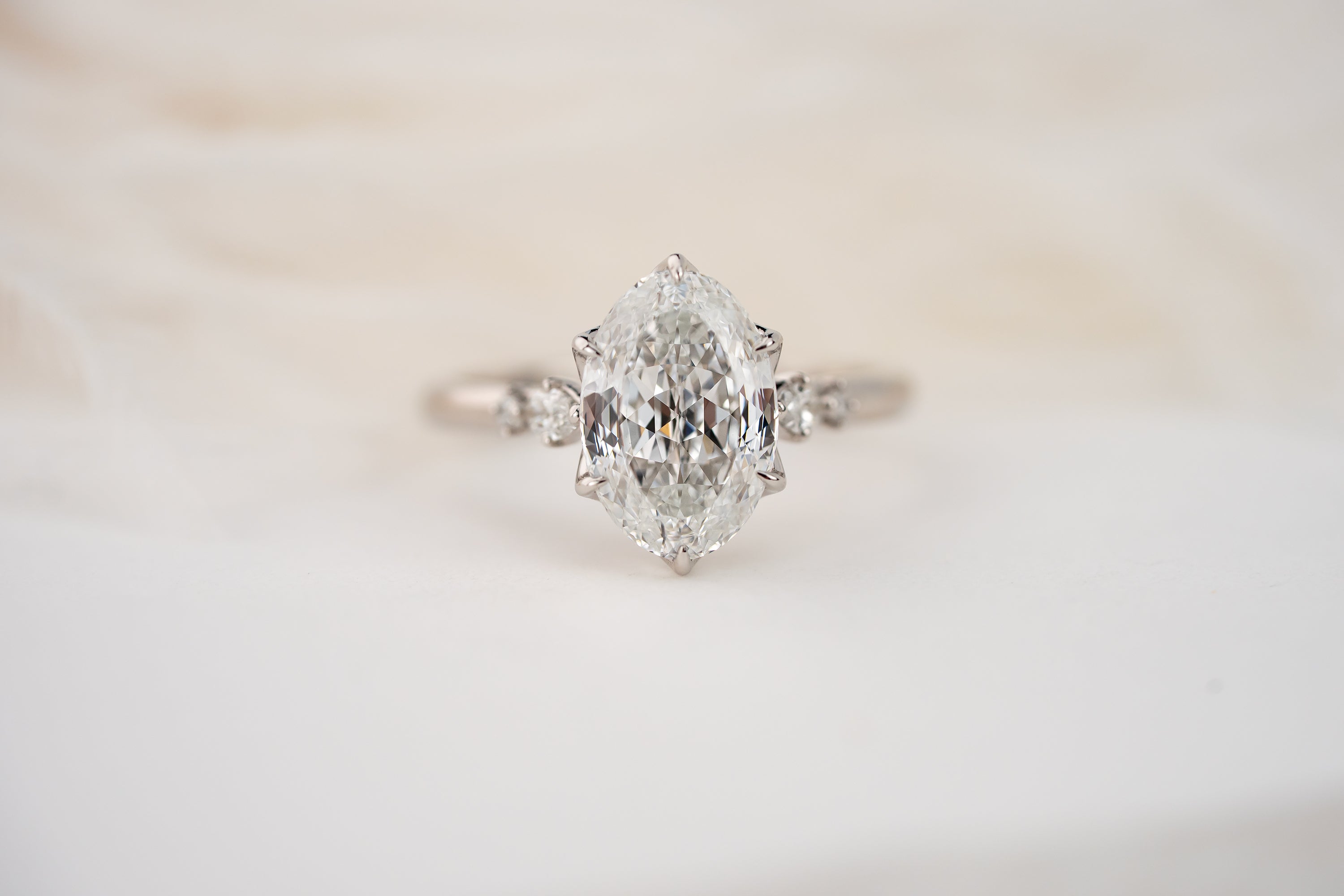
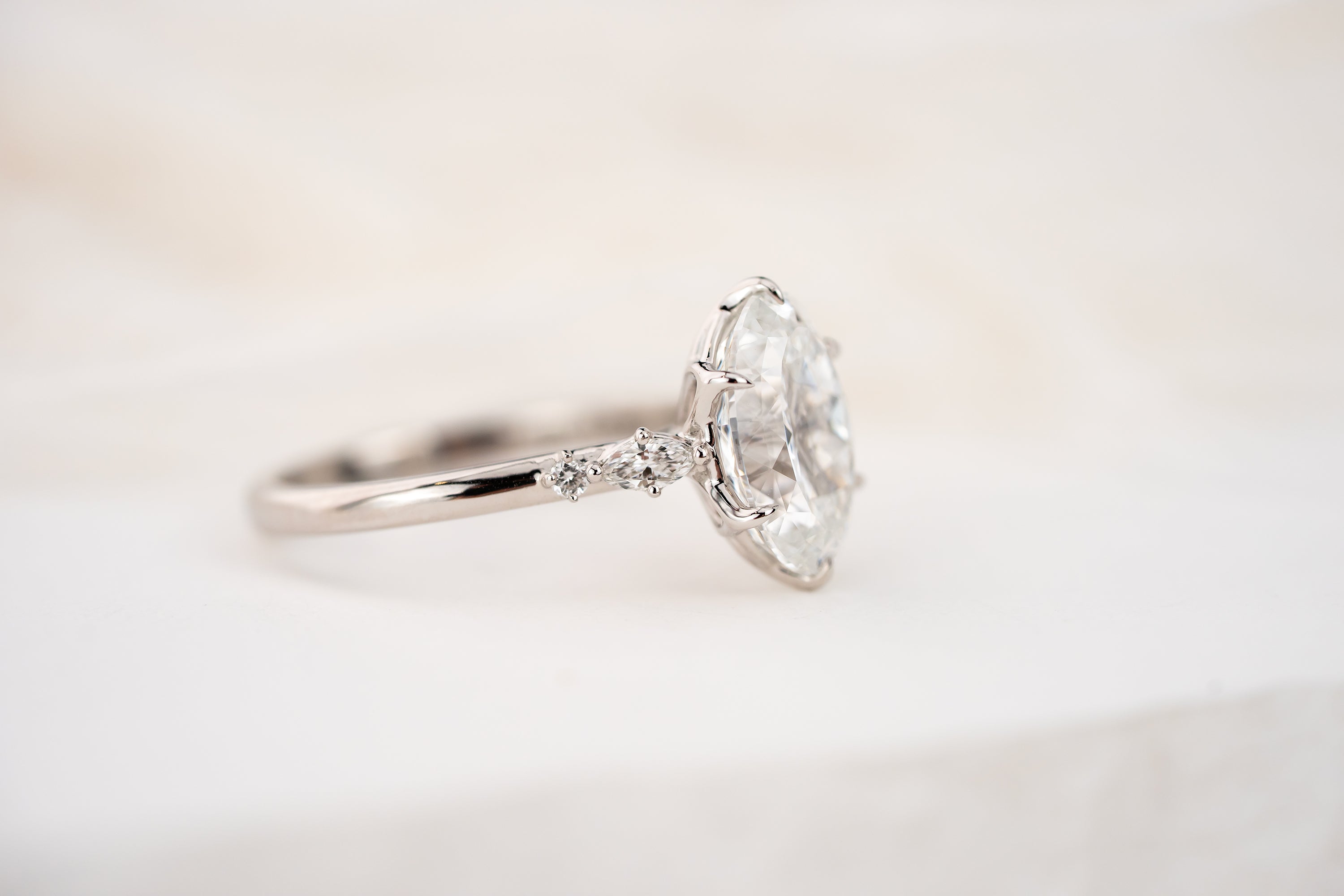
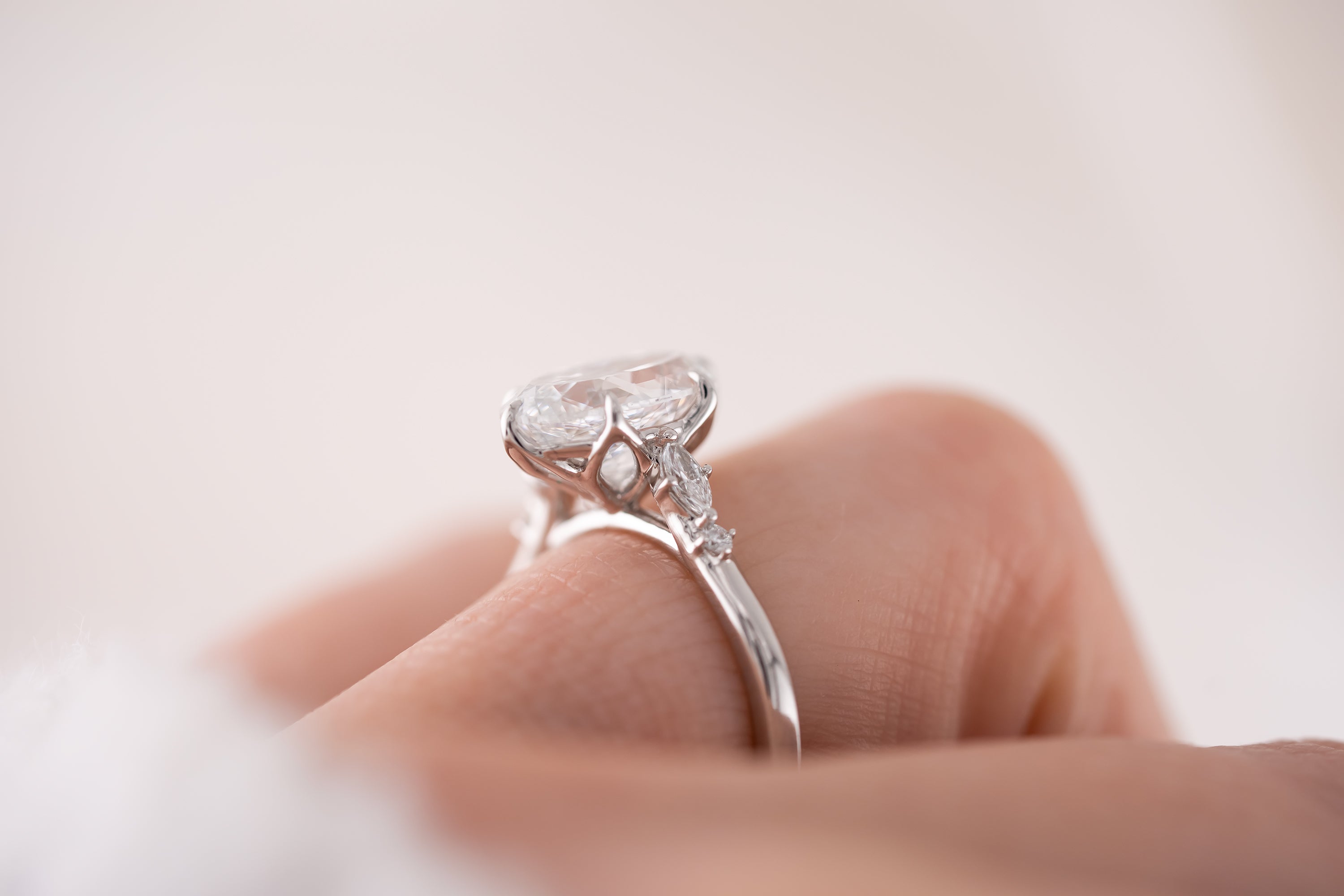
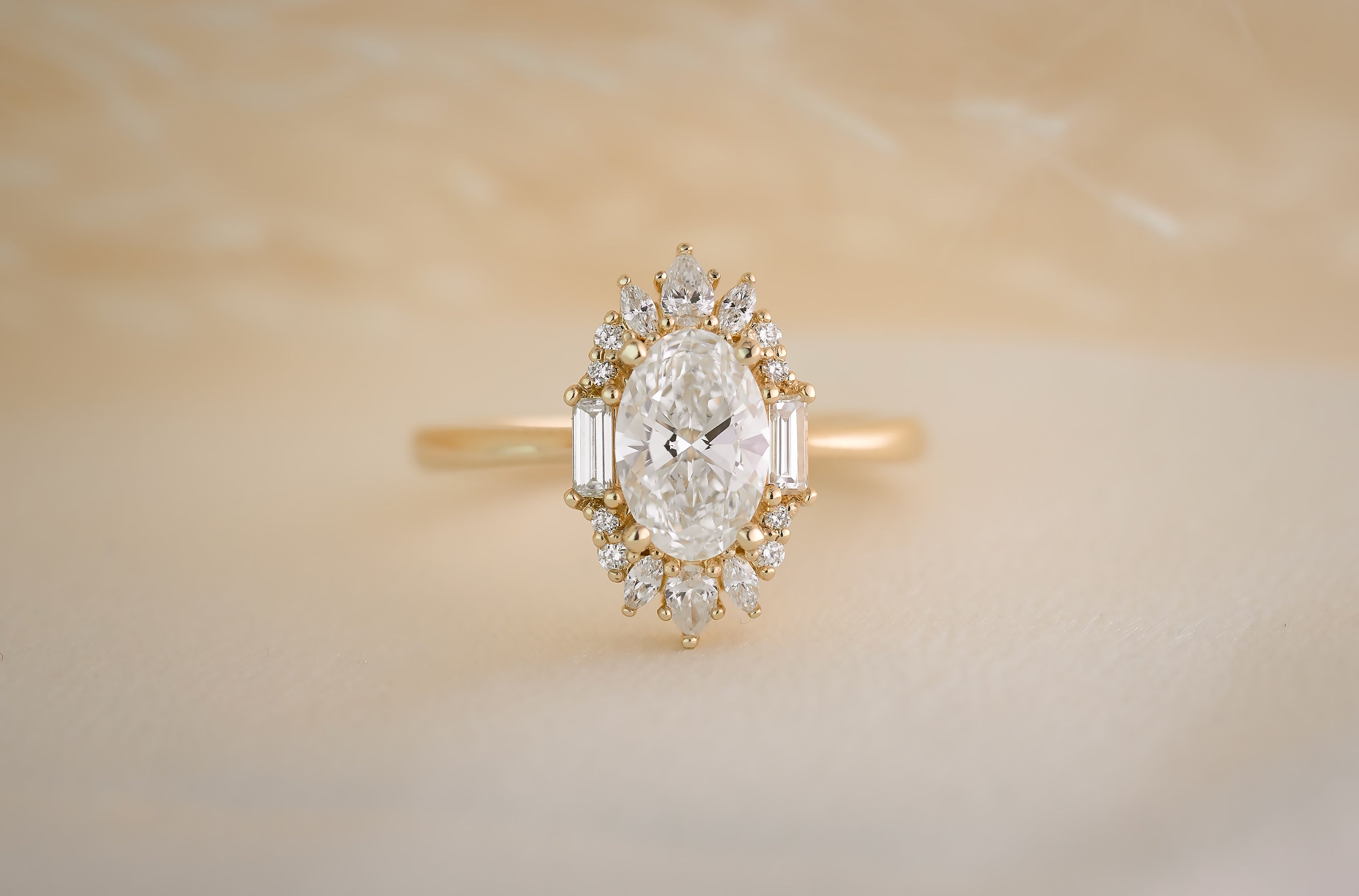
The Skye Ring | 3.22 CT Oval Rose Cut Diamond
・ONE OF A KIND・READY TO SHIP
- Regular price
-
$5,300.00 - Regular price
-
- Sale price
-
$5,300.00
Ring Details
- Metal: 14K White Gold
- Average Band Width: 2 mm
- Ring Size: 6.5
- Profile: Cathedral, Petal Prongs on center stone
-
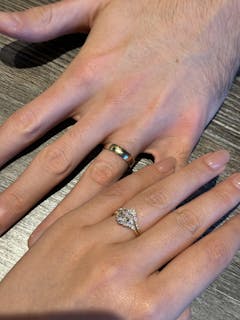
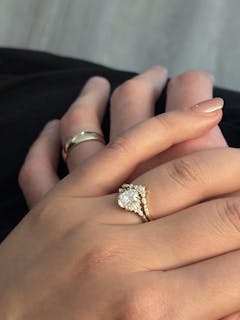
Wedding Band Pairing: The slightly elevated setting is designed to allow our plain flat wedding band to sit flush. We cannot guarantee compatibility with wedding bands from other jewelry brands.
Center Stone
- Type: Lab Created Diamond
- Color& Quality: E VS1
- Shape: Oval Rose Cut
- Carat Weight: 3.22 CT
- Dimensions: 11.2 x 7.6 x 4.9 mm
Accent Stones
- Lab Created Diamond (F–G color, VS clarity) 0.2 CTTW
Couldn't load pickup availability


About Lab Created Diamonds
-
Hardness
Lab-grown diamonds match the quality of natural diamonds. They are produced in a controlled setting using either high-pressure high-temperature (HPHT) methods or chemical vapor deposition (CVD) techniques. As a result, these diamonds have the same crystal structure and physical properties as those formed naturally, including their exceptional hardness. Both lab-grown and natural diamonds are rated 10 on the Mohs scale of mineral hardness, making them extremely resistant to scratching and equally durable.
- The Mohs scale is a measurement system used to assess and compare the hardness of minerals. Developed by Friedrich Mohs in 1812, it assigns a ranking from 1 to 10 to minerals based on their ability to scratch or be scratched by other minerals. This scale provides a simple and practical way to understand the relative hardness of different minerals, with 1 being the softest (e.g., talc) and 10 the hardest (e.g., diamond).
-
Color Range & Varieties
Lab-grown diamonds are available in a wide array of colors, spanning from completely colorless to vibrant hues. They cover the full spectrum, including:
- Colorless (D-F): Ranging from absolutely clear to near colorless.
- Near Colorless (G-J): Slightly tinted but still predominantly clear.
- Faint (K-M): Noticeable yellow or brown tints.
- Fancy Colors: Includes yellow, brown, pink, blue, green, and more exotic shades.